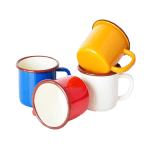
Use of enamelled products
Enamelled pots, serving and presentation dishes are extremely long-lasting when used carefully and maintained regularly.
We have put together a few useful tips on proper use for all enamel fans.
Instructions for use of enamel products
Enamel is glass coated on iron. Enamelled kitchen products are an ideal tableware and kitchen utensil that perfectly combines the positive properties of the two materials. The iron core conducts and retains heat, the non-porous glass surface is easy to clean and preserves flavours.
Please follow our instructions for use carefully to enjoy your chosen enamelled products for a long time.
First use of enamel products
For a healthier use of enamelled products, please remove all foil and stickers from the cookware. Sticky residues can be easily removed with cooking oil.
To remove dirt, pour boiling water with a pinch of vinegar and leave to soak. Then rinse with clean water and dry the cookware thoroughly.
Read the instructions for use of the cookware and hob carefully.
Ongoing Use
- In any case, the enamelled cookware should not be heated before any of the necessary ingredients have been placed in it. For example, oil or tomato sauce should be added first. Do not preheat your pan or pot with naked fire. Enamelled products are materials that heat up very quickly.
- Overheating can cause deformation of the base or damage to the hob by melting.
- Make sure that the cooking vessel does not overheat. The ideal operating temperature for healthy cooking is 220°C. Start cooking at medium heat and then increase the heat.
- Enamelled handles and lids heat up quickly because they are made of sheet steel. It is highly recommended to use potholders. For this purpose, you can use a leather, high-quality potholder with rubberised studs.
- Never place heated enamelled cookware in cold water. Cracks can form due to temperature shock. Therefore always let the cookware cool down a little before cleaning.
- The enamel is scratch and cut resistant. You can cut or remove food without any damage using knives, forks or kitchen aids.
- Avoid hitting hard objects/floors or hitting the edge of the lid hard with metal utensils – this can cause damage.
- Always lift the cookware onto the hob and do not slide it. Scratches and marks may appear. Always clean the base of the cookware and the hob thoroughly before cleaning.
If, despite your due care, the enamel flakes off from the outside, this is only a visual inconvenience. You can continue to use your enamelled serving and cookware without any problems. In the event of flaking only on the inside, we recommend replacement, as optimum hygiene is no longer guaranteed. For more information about this situation, you can check our article ‘ Can Enamel be repaired? ‘ You can review our article.